Read Anywhere and on Any Device!



Read, Discover and Enjoy
A wide selection of eBooks right at your fingertips!
Seems you have not registered as a member of lp.bookshunts.com!
You may have to register before you can download all our books and magazines, click the sign up button below to create a free account.
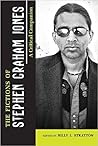

The Fictions of Stephen Graham Jones
Even as Stephen Graham Jones generates a dizzying range of brilliant fiction, his work remains strikingly absent from scholarly conversations about Native and western American literature, owing in part to his unapologetic embrace of popular genres such as horror and science fiction. Steeped in dense narrative references, literary and historical allusions, and experimental postmodern stylings, his fiction informs a broad array of literary and popular conversations. The Fictions of Stephen Graham Jones is the first collection of scholarship on Jones’s ever-expanding oeuvre. The diverse methodologies that inform these essays—from Native American critical theory to poststructuralism and gothic noirism—illuminate the unique complexity of Jones’s narrative worlds while positioning his works within broader conversations in literary studies and popular culture. Jones challenges at every turn the notions of what constitutes Native American literature and what it means to be a Native American writer. Contributing editor Billy J. Stratton foregrounds these heavily contested questions and their ongoing relevance to readers and critics alike.
I Was A Teenage Slasher
*USA TODAY Bestseller * Alex Award Winner * The “viciously clever, over-the-top, genre-skewing” (The New York Times Book Review) classic slasher story with a twist from Stephen Graham Jones, the master of modern horror and bestselling author of The Buffalo Hunter Hunter, The Only Good Indians, and the Indian Lake trilogy. 1989, Lamesa, Texas. A small town driven by oil and cotton—and a place where everyone knows everyone else’s business. So it goes for Tolly Driver, a good kid with more potential than application, seventeen, and about to be cursed to kill for revenge. Here Stephen Graham Jones explores the Texas he grew up in, and shared sense of unfairness of being on the outside through the slasher horror Jones loves, but from the perspective of the killer, Tolly, writing his own autobiography. Find yourself rooting for a killer in this “playful, self-aware, and remarkably gory horror novel” (The New York Times).
The Only Good Indians
A NEW YORK TIMES BESTSELLER From bestselling author Stephen Graham Jones comes a “masterpiece” (Locus Magazine) of a novel about revenge, cultural identity, and the cost of breaking from tradition. This is a remarkable horror story that “will give you nightmares—the good kind of course” (BuzzFeed). From New York Times bestselling author Stephen Graham Jones comes a novel that is equal parts psychological horror and cutting social commentary on identity politics and the American Indian experience. Fans of Sylvia Moreno Garcia and Tommy Orange will love this story as it follows the lives of four American Indian men and their families, all haunted by a disturbing, deadly event that took place in their youth. Years later, they find themselves tracked by an entity bent on revenge, totally helpless as the culture and traditions they left behind catch up to them in a violent, vengeful way. In this “thrilling, literate, scary, [and] immersive” (Stephen King) tale, Jones blends his signature storytelling style with a haunting narrative that masterfully intertwines revenge, cultural identity, and tradition.
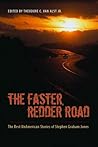
The Faster Redder Road
This collection showcases the best writings of Stephen Graham Jones, whose career is developing rapidly from the noir underground to the mainstream. The Faster Redder Road features excerpts from Jones's novels--including The Last Final Girl, The Fast Red Road: A Plainsong, Not for Nothing, and The Gospel of Z--and short stories, some never before published in book form. Examining Jones's contributions to American literature as well as noir, Theodore C. Van Alst Jr.'s introduction puts Jones on the literary map.
States of Grace
The bestselling author "offers up lean, deftly composed short-shorts that seem effortless but inflict a surprising amount of mayhem considering their size" (Brian Evenson, O. Henry Award-winning author). Like a gut punch, like a lightning strike, nearly seventy pieces of flash fiction in this expanded edition--featuring twenty previously uncollected tales, including ten original stories--from Stephen Graham Jones showcase the visceral bite of his prose and scope of his vision. From bungee jumpers to truck drivers, from childhood memories to orgies, these are vignettes of the extraordinary moments that make up ordinary days. In "Animals I've Known," a golden retriever surrenders to the sensor...
Mongrels
Nominated for both the Shirley Jackson and Bram Stoker Awards, and a Best of 2016 selection of Tor.com and Book Riot, acclaimed horror writer Stephen Graham Jones' (The Only Good Indians and My Heart is a Chainsaw) Mongrels goes beyond your typical werewolf story to show a young boy, mired in poverty and always on the run, coming-of-age in a world that fears him and hates his family...but may just be more monstrous than he could ever be. He was born an outsider, like the rest of his family. Poor yet resilient, he lives in the shadows with his aunt Libby and uncle Darren, folk who stubbornly make their way in a society that does not understand or want them. They are mongrels, mixed blood, nei...
American Indian Literature
Discover the essential people, works, movements, and themes in American Indian literature. American Indian literature is a varied and vibrant collection of Indigenous artistic expression. American Indian novelists, poets, essayists, and critics have over the last four centuries asserted powerful forms of intellectual and artistic sovereignty, writing in English while building on discrete tribal oral traditions and forms of storytelling. This encyclopedia introduces readers to the key historical and contemporary figures in American Indian literature and their defining works. From the fiery sermons of Methodist minister William Apess to the Pulitzer Prize-winning novel House Made of Dawn by N....
The Future Imaginary in Indigenous North American Arts and Literatures
This book examines the future in Indigenous North American speculative literature and digital arts. Asking how different Indigenous works imagine the future and how they negotiate settler colonial visions of what is to come, the chapters illustrate that the future is not an immutable entity but a malleable textual/digital product that can function as both a colonial tool and a catalyst for decolonization. Central to this study is the development of a methodology that helps unearth the signifying structures producing the future in selected works by Darcie Little Badger, Gerald Vizenor, Stephen Graham Jones, Skawennati, Danis Goulet, Scott Benesiinaabandan, Postcommodity, Kite, Jeff Barnaby, and Ryan Singer. Drawing on Jason Lewis’s "future imaginary" as the theoretical core, the book describes the various forms of textual representation and virtual simulation through which notions of Indigenous continuation are expressed in literary and new media works. Arguing that Indigenous authors and artists apply the aesthetics of the future as a strategy in their works, the volume conceptualizes its multimedia corpus as a continuously growing archive of, and for, Indigenous futures.
Postindian Aesthetics
Postindian Aesthetics is a collection of critical, cutting-edge essays on a new generation of Indigenous writers who are creatively and powerfully contributing to a thriving Indigenous literary canon that is redefining the parameters of Indigenous literary aesthetics.
Don't Fear the Reaper
A Locus Award Finalist NATIONAL BESTSELLER December 12th, 2019, Jade returns to the rural lake town of Proofrock the same day as convicted Indigenous serial killer Dark Mill South escapes into town to complete his revenge killings, in this “superb” (Publishers Weekly) sequel to My Heart Is a Chainsaw from New York Times bestselling author Stephen Graham Jones. Four years after her tumultuous senior year, Jade Daniels is released from prison right before Christmas when her conviction is overturned. But life beyond bars takes a dangerous turn as soon as she returns to Proofrock. Convicted Serial Killer, Dark Mill South, seeking revenge for thirty-eight Dakota men hanged in 1862, escapes from his prison transfer due to a blizzard, just outside of Proofrock, Idaho. Dark Mill South’s Reunion Tour began on December 12th, 2019, a Thursday. Thirty-six hours and twenty bodies later, on Friday the 13th, it would be over. Don’t Fear the Reaper is the “adrenaline-filled” (Library Journal, starred review) sequel to My Heart Is a Chainsaw from New York Times bestselling author Stephen Graham Jones.

Read Anywhere and on Any Device!
Enyoy your eBooks either on your Smartphone, Tablet or Desktop.
