Read Anywhere and on Any Device!



Read, Discover and Enjoy
A wide selection of eBooks right at your fingertips!
Seems you have not registered as a member of lp.bookshunts.com!
You may have to register before you can download all our books and magazines, click the sign up button below to create a free account.

Opps! We could not found Functionalism Linguistics, but we recommended other related books!
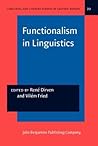
Functionalism in Linguistics
This volume offers a variety of viewpoints on the functional approach to the study of language. After an exposition of the Prague School functionalism, and Dik's and Halliday's functional approaches, it presents a wider area of text-linguistic, psycholinguistic, sociolinguistic, theoretical, descriptive and applied issues from a functional point of view, testifying of the very wide-spread and in-depth impact of functionalist thought on the present-day linguistic scene.
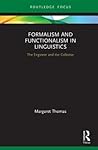
Formalism and Functionalism in Linguistics
This volume is a concise introduction to the lively ongoing debate between formalist and functionalist approaches to the study of language. The book grounds its comparisons between the two in both historical and contemporary contexts where, broadly speaking, formalists’ focus on structural relationships and idealized linguistic data contrasts with functionalists’ commitment to analyzing real language used as a communicative tool. The book highlights key sub-varieties, proponents, and critiques of each respective approach. It concludes by comparing formalist versus functionalist contributions in three domains of linguistic research: in the analysis of specific grammatical constructions; in the study of language acquisition; and in interdisciplinary research on the origins of language. Taken together, the volume opens insight into an important tension in linguistic theory, and provides students and scholars with a more nuanced understanding of the structure of the discipline of modern linguistics.
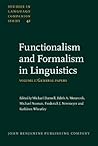
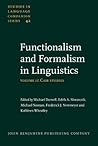
Functionalism and Formalism in Linguistics
The 23rd UWM Linguistics Symposium (1996) brought together linguists of opposing theoretical approaches — functionalists and formalists — in order to determine to what extent these approaches really differ from each other and to what extent the approaches complement each other. The two volumes of Functionalism and Formalism in Linguistics contain a careful selection of the papers originally presented at the symposium. Volume I includes papers discussing the two basic approaches to linguistics; with contributions by: Werner Abraham, Stephen R. Anderson, Joan L. Bybee, William Croft, Alice Davidson, Mark Durie, Ken Hale, Michael Hammond, Bruce P. Hayes, Nina Hyams, Howard Lasnik, Brian Mac...
Combining Functional Linguistics and Skopos Theory
"... Explores how Halliday's Systematic Functional Linguistics (SFL) and Vermeer's Skopos theory of translation can be combined in contastive ... linguistic and textal analysis of two corpora of Greek Cypriot and British folktales." (from back cover).
Directions in Functional Linguistics
Functional linguistics is concerned with the function of language and considers it an essense of human language. Views like this is not particularly new, but rather traditional in the history of linguistics. But today functional linguistics is constituted by a wide range of theoretical and methodological concerns. What unifies them as functional is the concern with discourse. This is quite natural since language can only function in discourse, not as isolated sentences. This collection of papers reflects some of the major approaches and methodologies in contemporary functional linguistics in Japan and the United States. Based on the fundamental concerns with discourse, the nine articles deal...

Read Anywhere and on Any Device!
Enyoy your eBooks either on your Smartphone, Tablet or Desktop.
