Read Anywhere and on Any Device!



Read, Discover and Enjoy
A wide selection of eBooks right at your fingertips!
Seems you have not registered as a member of lp.bookshunts.com!
You may have to register before you can download all our books and magazines, click the sign up button below to create a free account.



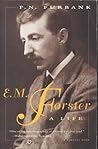

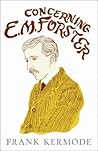
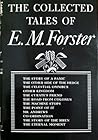
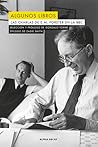
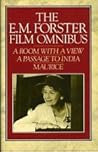
E.M. Forster
Nicholas Royle provides detailed readings of all Forster's novels, as well as of critical writings such as his Aspects of the Novel.
E. M. Forster, Best Novels
Edward Morgan Forster (1879 - 1970) was an English novelist, short story writer, essayist and librettist. He is known best for his ironic and well-plotted novels examining class difference and hypocrisy in early 20th-century British society. Foster is the novelist who can be read again and again and who, after each reading, gives what few writers can give us after our first days of novel-reading, the sensation of having learned something else. In this book: A Room with a View, (1908) Howard's End, (1910) Where Angels Fear to Tread, (1905)
E. M. Forster, Collection Novels
Edward Morgan Forster (1879 - 1970) was an English novelist, short story writer, essayist and librettist. He is known best for his ironic and well-plotted novels examining class difference and hypocrisy in early 20th-century British society. Foster is the novelist who can be read again and again and who, after each reading, gives what few writers can give us after our first days of novel-reading, the sensation of having learned something else. In this book: The Celestial Omnibus and other stories (1911) Howard's End, (1910) Where Angels Fear to Tread, (1905) A Room with a View, (1908) The longest Journey, (1907)
E.M.Forster
The five novels E.M.Forster published during his lifetime enjoyed a popularity and critical acclaim out of all proportion to this modest fictional output or the books' apparent pretensions: certainly since the publication of Howards End in 1910 he has been regarded almost without question as one of the foremost novelists of the century. Since his death in 1970 there has been no slackening of interest; the appearance of a comprehensive biography, an edition of his letters, a major critical edition of his works, and other scholarly and critical aids has given fresh impetus to the reassessment of his achievement. The present study provides a short account of Forster's life and career, followed by detailed discussion of his major writings. A final chapter considers his posthumous novel Maurice and the short stories. Although his most significant work belongs to the first quarter of the twentieth century, Forster's alliance of wit and seriousness, satiric comedy and moral insight, gives it a perennial freshness for new generations of students and readers.
A Great Unrecorded History
A REVELATORY LOOK AT THE INTIMATE LIFE OF THE GREAT AUTHOR—AND HOW IT SHAPED HIS MOST BE LOVED WORKS With the posthumous publication of his long-suppressed novel Maurice in 1970, E. M. Forster came out as a homosexual— though that revelation made barely a ripple in his literary reputation. As Wendy Moffat persuasively argues in A Great Unrecorded History, Forster's homosexuality was the central fact of his life. Between Wilde's imprisonment and the Stonewall riots, Forster led a long, strange, and imaginative life as a gay man. He preserved a vast archive of his private life—a history of gay experience he believed would find its audience in a happier time. A Great Unrecorded History is...
Great Novels of E.M. Forster
A renaissance of E.M. Forster is currently under way, as the success of the many films based upon his novels demonstrates Forster's appeal to the modern audience. Four of his best works--Howard's End, A Room with A View, The Longest Journey and Where Angels Fear to Tread--are brought together in this one-volume anthology.
4 Books by E. M. Forster
Compiled in one book, the essential collection of books by E. M. Forster:Howards EndThe Longest JourneyA Room With A ViewWhere Angels Fear to Tread
E.M. Forster
A collection of three works by E. M. Forster features a deluxe binding and the titles, Howard's End, A Room with a View, and Where Angels Fear to Tread.
E. M. Forster
Nicholas Royle presents a new Forster - one that has emerged from the posthumous publication of his explicitly homosexual fiction (since 1971) and from new critical attention to issues of language and textuality, Englishness and national identity, colonialism and postcolonialism, gender and queer theory. Royle provides detailed readings of all Forster's novels, as well as of critical writings such as his Aspects of the Novel. He explores the idea that Forster wrote not one, but six queer novels. Indeed, contrary to what may seem critical commonsense, this study proposes that Maurice is in some respects Forster's least queer book. All of his novels, however, are charged with a powerful eroticism and evoke a constant fascination with the generative peculiarities of words themselves. Focusing on such topics as the unforeseeable and the uncanny, deferred meaning and telepathy, Royle argues that Forster's work is stranger, more complex and compelling than earlier accounts may have suggested.

Read Anywhere and on Any Device!
Enyoy your eBooks either on your Smartphone, Tablet or Desktop.
